Common Genealogy Mistakes That Lead to Wrong Ancestors
Every family tree has a version of this moment. You find a marriage record for a Sarah Whitfield that fits the timeline, you attach it, and the branch grows. Three generations later you learn there were two Sarah Whitfields born a decade apart in neighboring counties, and the line you spent a winter building belongs to someone else's family.
Mistakes like this rarely come from laziness. They come from shortcuts that feel reasonable when a record finally carries the name you were hoping to see. Genealogy rewards a slower, more skeptical approach, and the researchers who avoid trouble are usually the ones who ask one more question before they save a new ancestor to the tree.
Assuming a Matching Name Means a Matching Person
In a single county in 1850, it is not unusual to find two or three men with the same name, the same approximate age, and the same occupation. Before you merge them into one person, slow down. Ask whether any record places both of them in different places on the same day, or whether a deed, will, or tax list names a wife or child who does not fit your version of the story.
Naming customs make this harder. In many families the first son was named for his paternal grandfather and the second for his maternal grandfather, so cousins across a county carried identical names for generations. Colonial records use "junior" and "senior" loosely, often to separate an older man from a younger one who was not his son at all.
- Build a profile, not a name. Age, birthplace, occupation, spouse, neighbors, land, church records, and military service all need to line up before you commit.
- Track the neighbors. Families migrated in clusters. If your John Miller appears beside the same four households in three different census years, those households are part of his story.
- Chase the records that separate people. A will naming only two children, or a deed witnessed by a brother, does more for your tree than ten documents that merely agree on a name.
Linking Generations Without Proof
A census entry showing a ten-year-old boy in a household is not evidence that he was the head of the household's son. It is evidence that a boy of that age lived there. Before 1850, only the head of household is named at all; everyone else is a tick mark in an age column. Building a generation on tick marks is guesswork wearing a researcher's coat.
Each parent-to-child link needs at least one record that says so plainly: a birth or baptism entry, a will or estate file, a guardianship bond, a land deed, a pension application. When you find one, write down what it actually says rather than what you assume it implies. "My beloved son John" in a will is proof. "John, age 12, in the household" is a possibility.
Trusting Other People's Trees
Online trees are useful as hints and dangerous as sources. Errors copy cleanly and travel fast. One researcher's guess about a maiden name becomes fifty trees' "fact" within a few years, and the repetition starts to feel like confirmation.
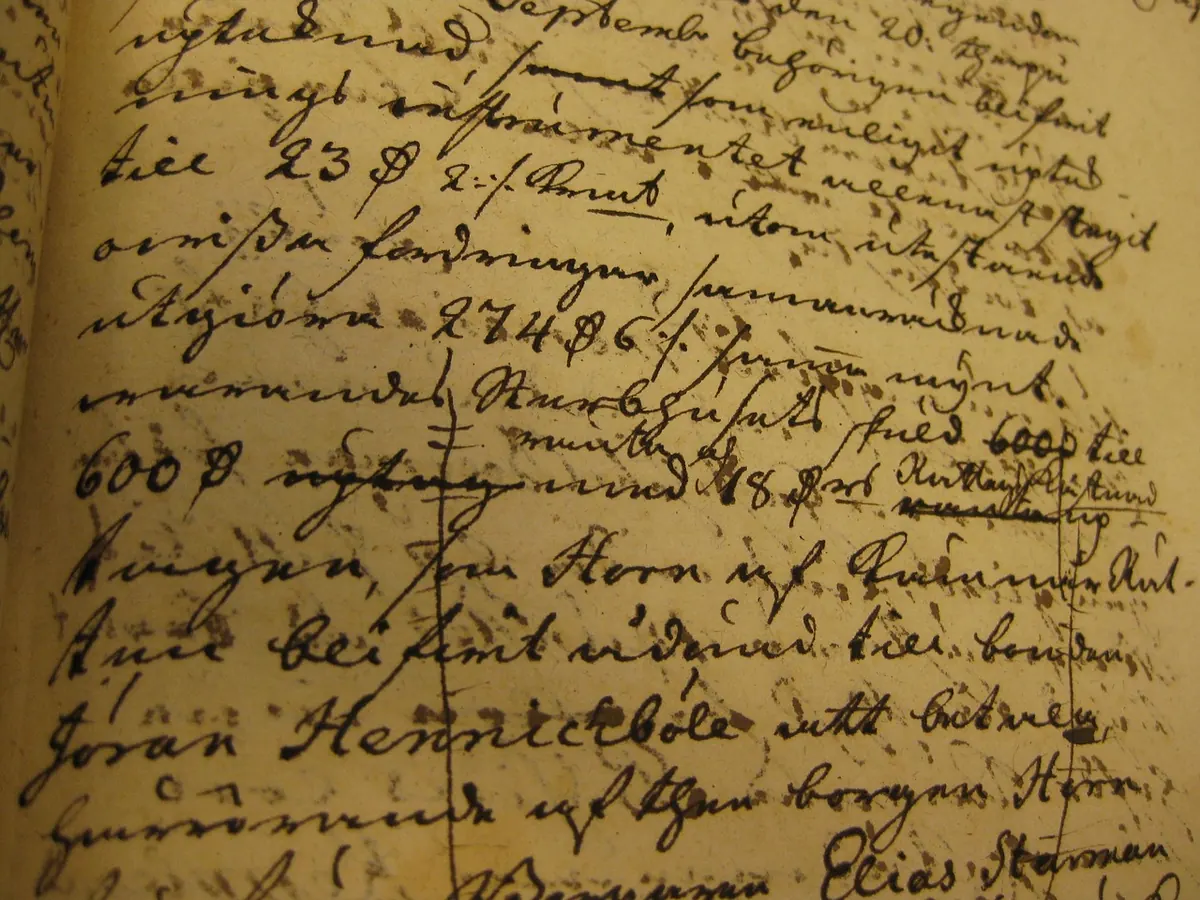
Indexes have the same problem in a different form. Handwritten records are hard to read, and an indexer working quickly may turn "Sinclair" into "Finclair" or misread a scribbled month. Always click through to the original image when it exists. If the original is unavailable, note that your information comes from an index, so a future researcher knows how much weight it can carry.
A record that fits your timeline is not the same as a record that belongs to your family.
Forgetting That Places and Records Change
County boundaries shift. A family that appears in one county in 1790 and a different county in 1800 may never have moved; the line simply moved around them. Before you search, find out when the county was formed and what it was carved from. A county created in 1836 cannot hold a marriage record from 1820, no matter how hard you search its courthouse.
Record loss matters just as much. Courthouse fires, floods, and ordinary neglect left gaps that no amount of persistence will fill. Instead of searching harder in the same place, search sideways: tax lists, church registers, cemetery records, newspapers, and the files of neighboring counties often cover what the main courthouse lost.
Then there is migration. Families followed rivers, roads, and relatives, and the trail frequently passes through a state you skipped because "nobody in our family ever lived there." A single land record in that skipped state can connect two branches you had given up on joining.
Stumbling Over Spelling and Dates
Our ancestors were not careful spellers, and the clerks who wrote down their names spelled what they heard. Search every plausible version before concluding a record does not exist. Try phonetic spellings, dropped and doubled letters, initials only, and maiden names alongside married names. Women are especially easy to lose, since a woman recorded under her husband's surname in one document may appear under her father's in another.
Dates need the same caution. In the British colonies and the early United States, the legal year began on March 25 rather than January 1 until the calendar changed in 1752, so a document dated "February 1730" may actually refer to what we would now call 1731. Transcribed dates also get mangled: a smudged 3 becomes an 8, and a whole family gets shifted a century. Record dates exactly as written, and note your interpretation separately.
Letting the Family Story Win
The stories passed down are not lies. They are clues with real roots, often preserving a genuine event that has been reshaped by retelling. The trouble starts when a story is treated as a conclusion instead of a lead.
Two common examples are worth handling carefully. The tale of an ancestor whose surname was changed by immigration officials at Ellis Island rarely holds up: clerks generally worked from the ship's manifest, which was created at the port of departure, and most name changes were voluntary, made at naturalization or simply adopted over time. The Cherokee princess grandmother appears in thousands of families, and while Native ancestry is sometimes genuine, the specific story almost never survives contact with the records. Test the story, keep what the documents support, and let the rest stay a story.
A Simple Routine That Keeps You Honest
None of this requires genius or endless free time. It requires a handful of habits applied consistently.
- Cite every fact. Note the record type, the date it was created, and where you found it. Future you will not remember.
- Work one generation at a time. Resist the pull of a promising line five generations back when the link in front of you is still unproven.
- Write a short proof summary. Two or three sentences explaining why you believe John is the son of William forces you to see the gaps.
- Record your negative searches. Knowing you already checked the 1860 census for three counties saves you from repeating the work.
- Date your conclusions. "As of March 2024" reminds you that new records may change the answer.
Wrong ancestors are rarely the result of one dramatic error. They accumulate through small, reasonable assumptions that were never tested. Test them, and the tree you hand down will hold up when someone else starts asking questions.
Photo: StartupStockPhotos / Pixabay